
What does it mean to live a life that reflects the heart of Jesus? This year, our school community is exploring that question through our annual theme: Soft Hearts, Serving Hands. Together, these two phrases remind us that following Jesus involves both an inward transformation of who we are and an outward expression of how we live.
Soft Hearts: A Changed Life
The story of the Bible begins with the extraordinary truth that God created human beings in His own image, designed to reflect His character, and live in relationship with Him and one another. At the centre of this design is what the Bible calls the heart. Far more than our feelings or emotions, the heart represents the core of who we are—our desires, motives, and character—including our posture toward God and others. Yet the biblical story also tells us that something has gone terribly wrong. Beginning with Adam and Eve, humanity has turned away from God, and we all carry a deep instinct to trust in and serve ourselves. One of the ways the Bible describes this condition is having a heart of stone—a nature resistant to God and His purposes.
Thankfully, this is not the end of the story! Through the prophet Ezekiel, God promises, “I will remove from you your heart of stone and give you a heart of flesh” (Ezekiel 36:26). This is the good news of the gospel: through faith in Jesus, God offers us a heart transplant—a new and transformed life. We can move from resistance to receptivity, from self-direction to a life increasingly shaped by God’s love.
This transformation is a gift of grace, but it is also a lifelong journey. Even as followers of Jesus, we continue to wrestle with selfishness and old habits. We need God’s ongoing work in us, as well as the encouragement and guidance of a community to help us grow. At Vernon Christian School, we want to nurture students whose hearts are becoming increasingly tender toward God, attentive to others, and responsive to the needs around them.
Serving Hands: A Life for Others
What does a life with a soft heart look like? Jesus gives us the clearest answer. He taught His disciples that greatness is found not in being served, but in serving others (Matthew 20:26–28). Though He was God, Jesus humbled Himself and took the posture of a servant (Philippians 2:6–7). His life on earth demonstrated that genuine purpose, joy, and fulfillment are found not in living for ourselves, but in loving God and giving ourselves for others.
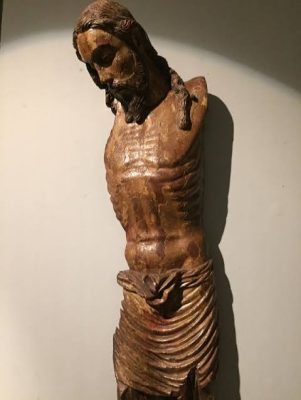
In Italy, an illustration of this calling can be found in a centuries-old wooden statue of Jesus. The statue has no arms, symbolizing the call of Christ’s followers to become His hands and feet in the world. The words traditionally attributed to St. Teresa of Ávila capture this beautifully: “Christ has no body now on earth but yours.” As the body of Christ, we are called to bring His compassion, kindness, justice, and practical care to a world in need—especially to those who are vulnerable.
Soft Hearts, Serving Hands is more than just a theme or tagline for the year; it is built directly into our curriculum. Teachers anchor each unit in the Biblical story and plan learning activities that develop student skills and knowledge in the context of meaningful work that shapes their hearts and serves their community. In this way, our educational program itself presents an ongoing invitation for students to become more like Jesus from the inside out.
As students, families, and staff grow together in faith, may our community increasingly reflect the heart of Christ—and may our serving hands become a tangible expression of His presence in our little corner of the world.